Where to View Fall Foliage in NJ and DE

Peep This! A Guide to Find South Jersey & Delaware's Best Fall Foliage

The leaves, they are a changin’! Or at least, they’re about to be. If you’re interested in feasting your eyes on the cavalcade of changing colors, you don’t have to drive all the way to New England to see them. In fact, there are several great options for fall foliage viewing on both sides of the Delaware Bay, and the Cape May – Lewes Ferry can connect you to them! We’ve pulled together a few easily accessible, self-driving options that you can turn into day trips, or use as the start of a weekend leaf peeping adventure.

New Jersey

When you depart the Ferry in Cape May, there are several driving options to find the start of this tour, which takes you through beautiful Belleplain State Forest (make sure to stop at picturesque Lake Nummy), out into the historic farmlands and open spaces of Cumberland County, and back down to Cape May.

From the Ferry terminal, you can head up the Garden State Parkway (which features some great foliage of its own) to exit 20, where you’ll exit on the left onto Route 50. Take Route 50 until it intersects with Route 49 in Tuckahoe, and pick up the trail below from there. Or, from the Ferry terminal, turn left on Bayshore Road and follow it along the Bay until it connects with Route 47, then wind your way up the western edge of Cape May County until you pick up the tour in Port Elizabeth.

Want to extend your tour or see more of the state? For more ideas on NJ fall foliage tours, check out the list Visit NJ has put together.

Delaware

From the lush wooded hills of the northern part of the state to the breezy stretches of coastline, there are plenty of options for leaf peeping in Delaware. Start with a quick tour featuring plenty of great foliage, by traveling the Historic Lewes Byway.

The byway takes you through Cape Henlopen State Park and into historic Lewes, where in addition to great foliage, you can catch a glimpse of the area’s 380 plus year history. The 12+ mile tour takes about an hour, so plan to add in some shopping, dining or exploring while you’re there.

Or, extend the tour by heading out to the Nanticoke Heritage Byway. The near-40 mile route takes you through western Sussex County, winding through farmlands, wooded areas and quaint small towns.
Wildflowers Near the Ferry

NJ Wildflowers Welcome Ferry Visitors

If you think flower season is limited to just the spring and summer, then you haven’t treated yourself to a fall ride down the Garden State Parkway. Whether you’re arriving at the Ferry from parts north, or leaving after traveling from the South, you’ll be welcomed by fields of purple and pink wildflowers throughout Cape May County on the Parkway.

In October, when many states farther north are deep into leaves changing, South Jersey is still treating visitors to the joys of blooming flowers.  Here are a 5 things you may not know about wildflowers on the Parkway:

  1. The nation has Lady Bird Johnson to thank for the proliferation of wildflowers throughout the country. Lady Bird, who served as the country’s first lady from November 1963 – January 1969, made beautification of cities and highways one of her key initiatives. The Highway Beautification Act of 1965 was nicknamed Lady Bird’s bill.
  2. The Garden State Parkway is so called because unlike many highways it was designed as a landscaped thoroughfare. Even as one of the busiest toll roads in the country, it is known for its wide green spaces particularly in South Jersey and robust assortment of deciduous and evergreen trees.
  3. The wildflowers displayed on the Parkway in the spring and fall can be purchased at gspwildflowers.com/shop in 1/4 pound bags for personal plantings around homes and offices.
  4. Wildflowers are not only easy on the eyes, but provide havens for birds, butterflies and pollinating insects.
  5. Fall wildflowers on the GSP are pink, but if you come in the spring, the assortment tends toward yellow and orange. In fact, Hammond’s yellow spring beauties are a type of wildflower only found in New Jersey!

Lighthouses in New Jersey

A Light(House) to Guide You: Historic Lighthouses in NJ

Lighthouses have guarded the New Jersey coast for centuries, lining the Atlantic Ocean and the Delaware Bay to warn vessels traveling the coast. While exact numbers vary depending on who you ask, the United States Coast Guard has identified 23 lighthouses in New Jersey. Here are a few of the most historic, beginning with the southernmost near our terminal in Cape May and heading up the coast to Sandy Hook, and dating as far back as the Revolutionary War. 
 
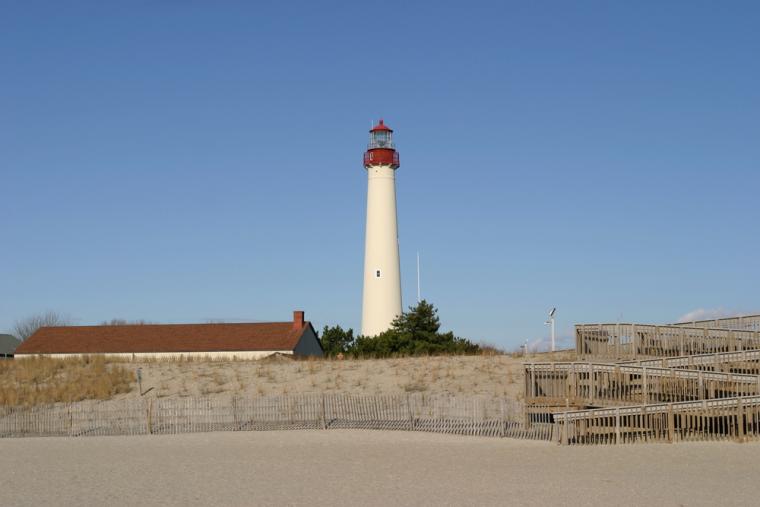
Cape May Lighthouse and Beach

Cape May Lighthouse

Location: Cape May 
Year built: 1859

With 199 steps to the top, the Cape May Lighthouse is one that is extremely special to us here at the Cape May-Lewes Ferry. Now maintained by the Mid Atlantic Center for the Arts & Humanities (MAC), the lighthouse has been open to the public to climb for over 30 years. It is the third documented lighthouse to be built in Cape May, the other two now underwater due to erosion. The lighthouse was automated in 1946 and still is operational to this day. Approximately 2.1 million people have paid to climb the lighthouse since it was opened it to the public! Interested in exploring this Cape May landmark for yourself?

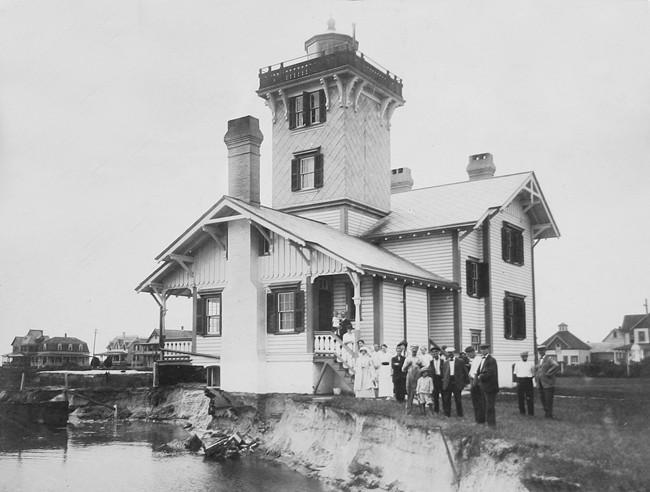
Historic photo of Hereford Inlet Lighthouse

Hereford Inlet Lighthouse

Location: North Wildwood
Year built: 1874

Designed by Paul Pelz, who would later go on to design the Library of Congress in Washington DC, the Hereford Lighthouse was built on the coast of the Hereford Inlet upon the recommendation of the United Sates Life-Saving Service, due to shifting sandbars and strong currents in the inlet. It only took the United States Life-Saving Service one year on the Hereford Inlet before recognizing the need for a lighthouse in the area and making the recommendation. Now, over 140 years later and officially listed on the State and National Registers of Historic Places, it offers a beautiful museum, information center and amazing gardens.

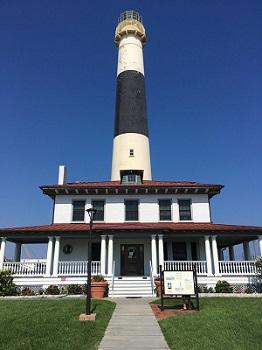
Absecon Lighthouse

Absecon Lighthouse

Location: Atlantic City
Year built: 1857

While the Absecon lighthouse is still lit, it is no longer considered a functional navigation aid. However, it is still NJ’s tallest lighthouse, and the third tallest in the US. With 228 steps open for climbing, this historic ascent brings you to the lighthouse’s original first-order Fresnel lens, as well as a view of the Atlantic City skyline. The Absecon Lighthouse is on both the New Jersey and the National Registry of Historic Places.

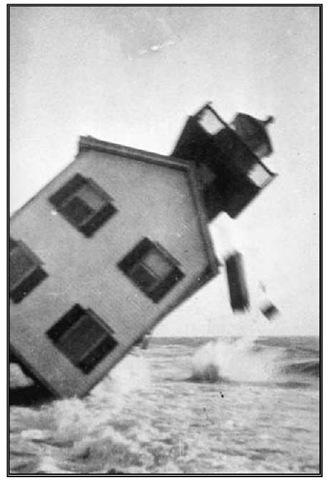
Tucker's Beach Lighthouse toppling and falling into the ocean

Tucker’s Beach Lighthouse

Location: Tucker’s Island
Year built: 1848

This is the only lighthouse on the list that is actually a replica. Built to guide vessels toward Little Egg Harbor, the lighthouse was built with very poor workmanship, leading many mariners of the time to say that the light it gave off was next to nothing. In 1855, the Tucker’s Beach Lighthouse, also then called the Egg Harbor Light, was fitted for a better light, only for it to be decided the lighthouse was not worth continuing to fund. Little Egg Harbor was not a safe trip at night anyway, and the Absecon Lighthouse had just been approved. Eventually, it collapsed into the Atlantic. Today, tourists can visit a replica of the lighthouse about six miles from the original location at the Tuckerton Seaport Experience, a model town designed to preserve the maritime heritage at the Jersey Shore.

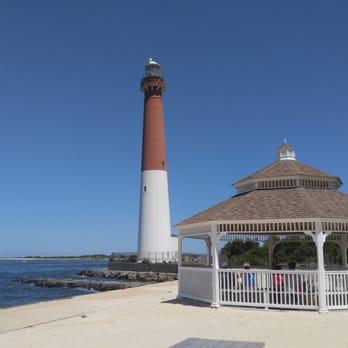
Barnegat Lighthouse and gazebo

Barnegat Lighthouse

Location: Long Beach Island
Year built: 1835

Recently relit 150 years after its original lighting date, the Barnegat Lighthouse was considered crucial for mariners to avoid sandbars along the coast of Long Beach Island. The original eventually collapsed in 1957, but had not been functioning for nearly 100 years at that point. The beam on the new light, replaced in 2009, can reach up to 22 nautical miles. Actually the second Barnegat lighthouse, “Old Barney” was built taller and with a better light after the first one was deteriorating and being crept in on by erosion.

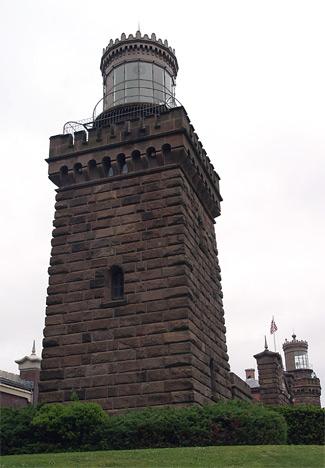
Twin Lights lighthouse

Twin Lights Lighthouse

Location: Highlands
Year built: 1862

Initially named Navesink Light Station, this lighthouse 200 feet above sea level was dubbed “Twin Lights of Highlands” by mariners who used it to mark their entrance into the New York Harbor. It has one flashing and one fixed light, hence the name. In 1893, Twin Lights was the site for the first official reading of the Pledge of Allegiance, and in 1899, the first wireless telegraph. Like us, the Highlands also has a ferry terminal, with their ferry, the Seastreak, taking commuters into NYC.

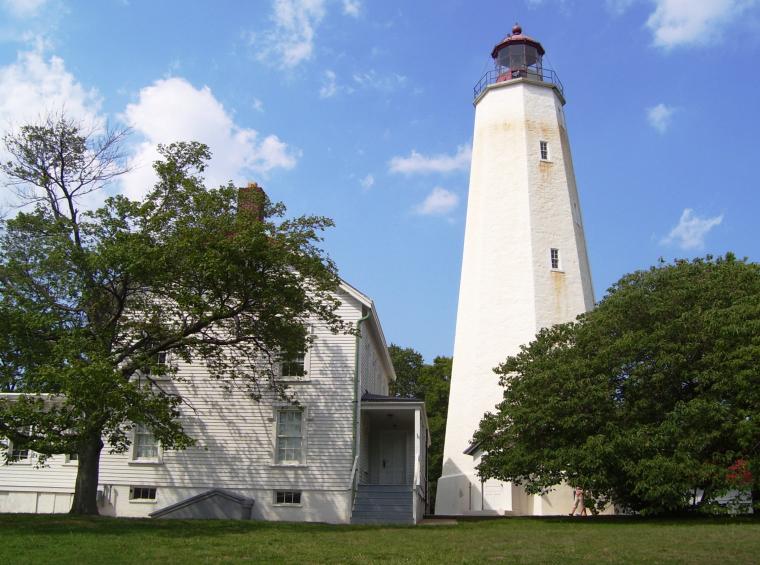
A ground level view of the light house in Sandy Hook, NJ

Sandy Hook Lighthouse

Location: Middletown
Year built: 1764

The Sandy Hook Lighthouse is actually a mile and a half from the Sandy Hook beach, located at Fort Hancock. It is the oldest working lighthouse not only in NJ, but also the United States! Predating the Constitution, the Sandy Hook Lighthouse is over 250 years old and played a role in the Revolutionary War. It was then called the New York Lighthouse, guiding boats to the harbor, and was guarded by the British Army, the navy, and the loyalists at what was then called Fort Sandy Hook. Despite many attempted attacks from American troops, the British help control over Sandy Hook for longer than any other location during the Revolutionary War.

Check Out The Latest Edition of the Twin Capes Traveller!

Search in CMLF

Cape May Lewes Ferry

Subscribe to our newsletter

Booking Form