
“Steps from the Lewes Terminal is an entrance to one of Lewes’s many scenic trails, replete with fall foliage and ideal for the perfect, cozy fall walk or bike ride. My favorite place to view fall foliage is right there, along the Junction and Breakwater Trail. The colorful leaves above and the ones that have dropped below you wrap you in the full immersive fall experience!”
-Lexi Sterling, Marketing & Social Media Coordinator
The leaves are a changin’ in Delaware, and prime season for fall color runs from mid-October through early November. That’s a short window to catch Delaware fall foliage at its best, but if you’re coming from South Jersey, you don’t have to drive all the way to New England to see it. The Cape May-Lewes Ferry, a Tripadvisor Travelers’ Choice Award Winner, carries you across the Delaware Bay on a 17-mile, roughly 85-minute cruise that drops you just outside historic Lewes. We’ve pulled together the best spots for leaf peeping on the Delaware side, from coastal trails and scenic byways to cypress swamps and state forests, plus tips on when to go.
When Is Peak Fall Foliage in Delaware?
Delaware State Parks
Delaware’s leaves begin turning in late September, and the color builds from there. Delaware State Parks puts prime season from late October through early November. DNREC notes that leaves really start turning and dropping around October, with timing that varies by species and weather.
Weather decides how bright the show gets. According to the USDA Forest Service, the most vivid reds come from warm, sunny days followed by cool nights below 45°F, while a warm, cloudy, rainy fall usually means less red. Keep an eye out for red maple, sweetgum, blackgum, scarlet oak, and sassafras, which the USDA lists among the trees that turn red.
Best Places to See Fall Foliage in Delaware at a Glance
Here’s a quick look at every spot in this guide, starting near the Lewes terminal and working outward.
| Spot |
Location | Size or Length | Fall Highlight |
| Cape Henlopen State Park | Lewes, about a mile from the ferry terminal | 8 trails | Coastal pine forest, marsh views, the Great Dune |
| Gordons Pond Trail | Cape Henlopen State Park | 5.2 miles | Pond views, boardwalk, upland pine forest |
| Junction and Breakwater Trail | Lewes to Rehoboth Beach | About 7.5 miles | Mature hardwood and conifer forests |
| Historic Lewes Byway | Lewes | 12.35 miles | Historic district, dunes and pine forests |
| Prime Hook National Wildlife Refuge | Milton | More than 10,000 acres | Red maple swamp, pine and hardwood forest |
| Redden State Forest | Just north of Georgetown | More than 14,000 acres | Oaks, maple and gum among loblolly pines |
| Abbott’s Mill Nature Center | Milford | 20-acre millpond | Forest, wetland and meadow trails |
| Nanticoke Heritage Byway | Western Sussex County | About 35 miles, about 45 minutes | Farmland, woods and the Woodland Ferry |
| Trap Pond State Park | Laurel | 9+ miles of water trails | Northernmost natural stand of bald cypress in the U.S. |
| Great Cypress Swamp | Frankford | 10,000 acres (DE and MD) | Bald cypress and black tupelo (interior accessible for events only) |
| Brandywine Valley Scenic Byway | Wilmington to the PA line | 12.25 miles | “Chateau Country” estates and gardens |
Reach Delaware Fall Foliage by Ferry
The Cape May – Lewes Ferry in the Fall
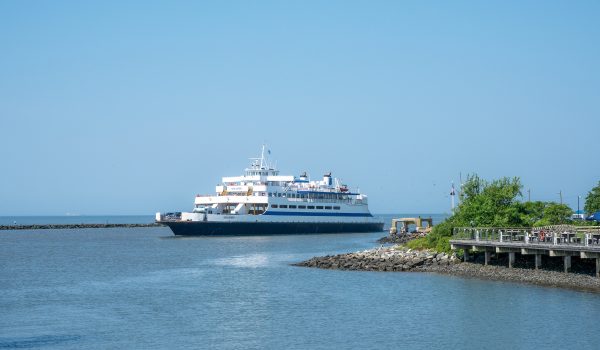
Your leaf-peeping trip starts the moment you board. The ferry ride itself is a 17-mile cruise across the Delaware Bay, and it lands you at the Lewes terminal, just a mile down the road from Cape Henlopen State Park. Planning to explore the trails on two wheels? You can bring your bike on the ferry for free, paying only the standard passenger fare. Just arrive at least 30 minutes before your departure. Four-legged leaf aficionados are welcome too, since pets can ride on the exterior vessel decks and stay in outdoor terminal areas.
Cape Henlopen State Park Hiking Trails
Cape Henlopen State Park’s Gordon’s Pond Trail
Cape Henlopen State Park sits where the Delaware Bay meets the Atlantic Ocean, and it’s the closest leaf peeping you’ll find from the ferry. Entrance fees run through Nov. 30: $10 a day for Delaware-registered vehicles and $20 for out-of-state vehicles. Walking or biking in is free. Arriving by bike? Our guide to biking on both sides of the Delaware Bay has more trail ideas.
Pinelands Trail
This two-mile loop passes four species of pine (loblolly, Virginia, pitch, and black) along with cranberry bogs. The evergreen backdrop makes any pops of autumn color around the bogs and forest edges stand out even more.
Gordons Pond Trail
Starting at the Gordons Pond parking lot, this trail follows the edge of the pond on level, packed crushed stone. It then switches to an elevated boardwalk and climbs through an upland pine forest before ending at the Herring Point parking area. Two scenic overlooks along the way give you views of the salt marsh and beach.
Junction and Breakwater Trail
Following a stretch of the former Penn Central railroad, this trail runs more than five miles between Lewes and Rehoboth Beach. It passes through mature hardwood and conifer forests and open fields, with marsh vistas at the Wolfe Glade and Holland Glade crossings. Hikers, bikers, and strollers are all welcome. Access in Lewes is from Kings Highway or Gills Neck Road.
Scenic Byways for Delaware Fall Colors
Delaware has six designated scenic byways, and three of them are made for a fall drive. Start close to the ferry with the Historic Lewes Byway, then head west or north if you have time to extend the tour.
Historic Lewes Byway
This 12.35-mile route follows Pilottown Road, Gills Neck Road, New Road, Kings Highway, Cape Henlopen Drive, and Savannah Road. It takes about an hour, according to DelDOT. Along the way, you’ll pass Cape Henlopen State Park, walking dunes that slowly move across the pine forests, and historic Lewes, the First Town in the First State. Plan to add in some shopping, dining, or exploring in the National Register historic district, and check out our guide to things to do in Lewes for ideas.
Nanticoke Heritage Byway
For a longer drive, head to western Sussex County. This route of about 35 miles takes about 45 minutes, running from the Route 20 exit to Bridgeville Road on US 13 and passing through Seaford, Bethel, and Laurel (DelDOT). The drive alternates between farmland, wooded areas, and small towns that were centers of trade and shipbuilding from the Colonial period through the 1800s. It crosses the Nanticoke River on the historic Woodland Ferry and ends at Trap Pond State Park.
Brandywine Valley Scenic Byway
If you’re up for a longer drive north, the Brandywine Valley is worth it. This 12.25-mile byway runs from Rodney Square in Wilmington along Routes 52 and 100 to the Pennsylvania line, and it takes about an hour. Often called “Chateau Country,” it passes Hagley Museum and Library, Nemours Estate, Winterthur, and Brandywine Creek State Park. It’s one of Delaware’s two National Scenic Byways.
Forests, Swamps and Wetlands for Fall Foliage in Delaware
Abbott’s Mill Nature Center
Southern Delaware’s fall colors aren’t limited to the coast. Elsewhere in the state, you’ll find a national wildlife refuge, the state’s largest forest, and some of the northernmost cypress swamps in the country.
Prime Hook National Wildlife Refuge
Located in Milton, Prime Hook protects more than 10,000 acres and provides habitat for over 245 species of birds (USFWS). For fall color, try the 0.8-mile Pine Grove Trail through pine and hardwood forest, or paddle the canoe trail into a red maple swamp. There’s no entrance fee, and trails are open from a half hour before sunrise to a half hour after sunset. Fall is also hunting season at the refuge, so check the refuge website before you go.
Redden State Forest
Just north of Georgetown, Redden is Delaware’s largest state forest at more than 14,000 acres (Delaware Forest Service). Loblolly pine is the main tree, but stands of oaks, maple, and gum add color in fall. More than 44 miles of trails are open for hiking, horseback riding, biking, and birding, including a 4-mile loop on the Headquarters Tract. Keep an eye out for the rustic Redden Lodge, built around 1903 for Pennsylvania Railroad executives and now on the National Register of Historic Places.
Abbott’s Mill Nature Center
Run by the Delaware Nature Society, this Milford nature center is home to Delaware’s only remaining operational water-powered mill, built in the early 1800s. The mill and its 20-acre pond are surrounded by miles of forest, wetland, and meadow trails, including a wheelchair-accessible boardwalk. The trails are free and open from sunrise to sunset daily, and leashed pets are welcome. Mill tours are on hold during renovations.
Trap Pond State Park
Trap Pond in Laurel is home to the northernmost naturally occurring stand of bald cypress in the U.S. Bald cypress is a conifer that drops its needles in fall, turning them orange-red to reddish-brown first. Paddle more than nine miles of water trails in a rented canoe or kayak, take a pontoon tour into the swamp, or hike or bike the 4.6-mile Bob Trail around the park. As of this blog’s publication, entrance is $5 for Delaware vehicles and $10 for out-of-state vehicles through Nov. 30, but be sure to check the Delaware State Parks website for the most up-to-date pricing.
Great Cypress Swamp
Straddling the Delaware-Maryland line near Frankford, the Great Cypress Swamp is the largest freshwater wetland and contiguous forest in Delaware. Baldcypress knees and black tupelo trunks rise from its tannin-amber water. Black tupelo, also called blackgum, is known for scarlet red fall color. The trail isn’t open to the public, so check the Delaware Wild Lands events calendar for guided visits.
Delaware in the Fall Pairs Well With a Trip to South Jersey
Why stop at one side of the bay? Our guide to fall foliage in South Jersey covers scenic drives through Belleplain State Forest and Cumberland County, starting right from the Cape May terminal. Make a full weekend of it and check out things to do in Cape May, NJ before you sail back. If you’re traveling with a friend, our Dock, Dine & Dream special offers Buy One, Get One passenger travel with promo code DREAM through Dec. 15, 2026.
FAQs
Which week of October is the best to see fall foliage in Delaware?
There is no single official peak week, since timing varies by tree species and weather. Delaware State Parks identifies prime season as being from late October through early November, so the second half of October is a reliable window for most of the state. See our section on when fall foliage peaks in Delaware for more details.
What is the prettiest town in Delaware in the fall?
We’re partial to Lewes, the First Town in the First State. Its historic district, the Historic Lewes Byway, and Cape Henlopen State Park are all minutes from the ferry terminal. Browse our list of things to do in Lewes, DE to plan your visit.
Where can I find fall foliage in Delaware in 2026?
Popular spots include the trails at Cape Henlopen State Park, the Historic Lewes Byway, Redden State Forest, and the bald cypress swamp at Trap Pond State Park. Northern Delaware’s Brandywine Valley Scenic Byway is another option for a longer drive. Our Delaware fall foliage spots at a glance list each location with its size and highlights.
What are the predictions for the fall foliage color forecast in 2026 in Delaware?
Delaware’s state agencies have not published an official fall foliage forecast. According to the USDA Forest Service, warm, sunny days and cool nights below 45°F produce the brightest reds, while a warm, rainy fall tends to mute them. Since conditions shift each year, check the ferry schedule and plan a flexible trip during prime season.
Do Delaware State Parks charge entrance fees in the fall?
Yes. Delaware State Parks charge daily entrance fees through Nov. 30: $5 at inland parks and $10 at beach parks for Delaware vehicles, and $10 and $20 for out-of-state vehicles. Walking or biking into the park is free, which makes Cape Henlopen State Park’s trails an easy trip from the ferry.